by Michael Shedlin
A film does not have to be made by Leni Riefenstahl or the USIA to be a propaganda film. All dramatic movies contain elements that either reinforce or reject dominant cultural phenomena. If prevailing social relations are reinforced or suggested as the normal state of affairs, then the film becomes propaganda for existing mores and institutions. While the filmmaker may not deliberately set out to make an explicit political statement, be or she will select countless situations, settings, and visual details which point out the surrounding social context as either natural (virtuous) or unnatural (unjust). Most films, of course, are committed to the former mode. The great majority of commercial films are produced not to express a particular artist’s passions, but to insure immediate cash income to the producers. To annoy the audience by rejecting or questioning its conception of reality would he bad business and therefore just isn’t done.
Liberal directors often make “social comment” films that criticize egregious dysfunctions like capital punishment, bigotry, or even alienation, but these works nearly always imply that the overall social environment is valid and that the immorality comes from individual psychological weakness or deviation from essentially sound Western ideals. Certain directors of American films, such as Chaplin, Renoir, Lang, Kazan, Penn, Kubrick, and Perry, have consistently displayed a humane commitment to the broader social implications of their works— beyond the promulgation of liberal stereotypes or the condemnation of obvious injustice (cf. Stanley Kramer and Norman Jewison). European film-makers, from Vigo and Bunuel to Antonioni and Godard, have consistently moved beyond “social comment” into an exploration of the relationship between interpersonal communication and social functioning.
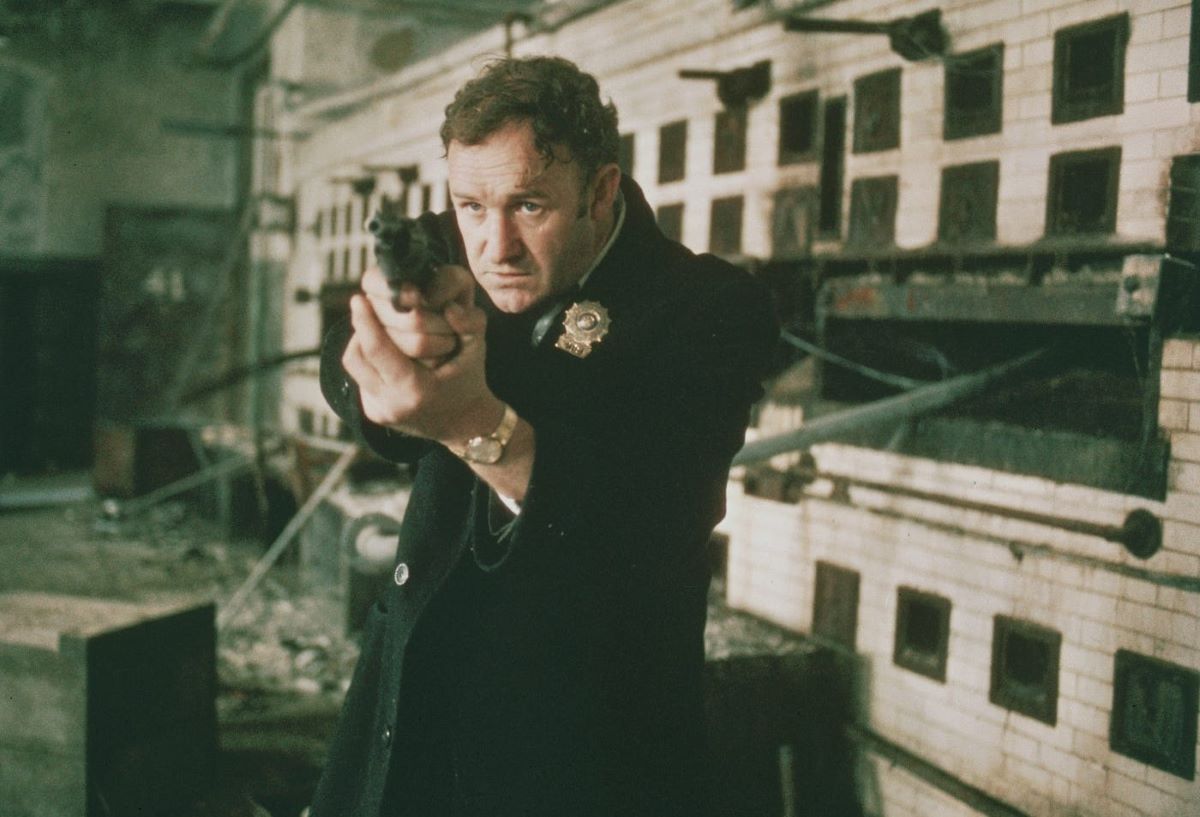
Since propaganda, whether blatant or subtle, and whether “left” or “right,” works primarily through the emotions and not the intellect, it is not necessarily the explicit or easily recognizable elements of a film that produce the strongest effect on the consciousness of the viewer. Such is the case with a film like The French Connection. The explicit values are evident. The film is exquisitely made. An unnerving tension is maintained, not by the plot or the music, but by our fascination with Popeye’s dementia, by the garish sound track of screeching tires, screaming engines, slamming doors and smashing flesh (Pauline Kael called the film “an aggravated case of New York”), and by the expert movement of the film’s visual elements. The sequence in the nightclub where Popeye first smells the dope smugglers; the sequence when Charnier, the French connection, eludes Popeye’s tail; and the tearing apart of the dirty Lincoln are masterful examples of visual story telling. Throughout, the acting is excellent, the script efficient, the camerawork bright and fast. Director William Friedkin is quite good at ensemble movement, his cutting is nervous and harsh, his use of locations surpassingly acute. As a director of action, Friedkin seems more complicated and technically superior to Don Siegel, Jack Smight, Peter Yates, and Richard Fleischer, but less formally sophisticated than Peckinpah or Penn. Stylistically, Friedkin resembles Arthur Penn most closely among American directors, although Friedkin is more New York-oriented and less prone to lyrical interludes.
Beneath the brilliant and diverting surface of The French Connection, however, is a network of implications and assumptions that transmit rightist propaganda. The film itself is not especially complicated, but these implicit messages have a wide and equivocal significance.
It is necessary to stress again that an American studio production like The French Connection is only secondarily art. It is, above all, a product, a commodity, a consumer item. The French Connection was selected over all other available stories because its producers felt that it would appeal to enough filmgoers to make money. Friedkin, far from being the creator of the film, was a worker hired by big money to direct a package that was handed to him. Regardless of Friedkin’s embellishments, the instigators, the originators of The French Connection control its essential meanings.
Who are these people and what are they up to? The film’s executive producer was G. David Schine, once notorious as a member of the late Senator Joseph McCarthy’s staff. Producer Phil D’Antoni’s last effort, Bullitt, one of the big commercial hits of all time, was about a hip cop, certainly one of the most pernicious and opportunistic distortions ever devised. The final script was apparently written by Ernest Tidyman, who wrote Shaft, and was based on a book by Robin Moore, who wrote The Green Berets.
By playing on the confused fantasies of a frightened and schizophrenic culture, the makers of The French Connection have built a product that addresses itself directly to the major issues of our society—racism, corrupt power, brutality, drugs—and yet manages to subsume all social significance beneath an explosion of gaudy adventurism that ultimately reinforces the heroism of the authorities it seems to be criticizing.
The French Connection is a prime example of the cinema of manipulation over engagement. The final selective principle is not “What does this say?” but “Will it work?” The film is manufactured for eloquence of effect rather than communication of insight. While seemingly rampant with realism and social comment (gritty locations, funky language, white cops brutalizing black citizens, police detail, etc.), The French Connection is actually devoid of social commitment because it refuses to take seriously the issues it raises. Through the utilization of a comic-book format, the inhumanity of the characters is minimized and turned into amusing mannerisms. Thus Popeye’s leering male supremacism eventuates in a quirky fling with a willing young girl. When Popeye raids the black bar, our attention is drawn to his wisecracks and bullying rather than to the reality of colonized minorities who must use drugs to escape the effects of their oppression. Popeye’s homey ethnic slurs draw laughs from the audience-racism becomes a gag.
There is no reason to expect all movies to reflect an anti-establishment analysis or to challenge injustice; however, since The French Connection purports to deal with social issues, it can be discussed as a serious film, a film with a message. When Gene Hackman and the “real Popeye” appeared on the Dick Cavett TV show, they talked about the tragedy of the junkie on the street rather than police malfeasance. The basic assumption of the film is that heroin traffic must be stopped at all costs. By objectifying evil in the form of heroin and heroin dealers, the authorities—be they police or studios— divert the public’s attention from the essential cultural patterns that caused the drug use in the first place. They analyze the symptoms rather than the sources.
Popeye is fighting not just Frog One, but evil itself. Like Dirty Harry, who hunts a sadistic random sniper, Popeye is protecting society from unimaginable menace. Thus the principal subliminal message of the film: arbitrary power is good because it keeps the society from falling apart; authoritarian action is necessary to protect us from the inferiors among us who would become criminals and drug addicts if unchecked by the incorruptible executors of law and reason. That this attitude is congruent with two of the pillars of Western political philosophy—the theory of innate aggressiveness and the lesser-of-two-evils strategy—indicates how inextricably the film is linked to broader issues. Irwin Silber points out three further subtle messages contained in The French Connection: (1) it is implied that police brutality is more the outgrowth of personal psychosis rather than the logical result of deliberate policy; (2) it is implied that heroin traffic has nothing to do with international capitalism, and that it is entirely a “criminal” venture; (3) it is implied that foreigners and American minorities are ultimately no match for the dogged white innocent out there battling a crooked world.
If we didn’t know something about the producers of The French Connection, we might assume that it is consciously about the replacement of responsibility with ritual among authoritarian figures, about the psychopathology of power. Popeye, as a cop, is literally a representative of the authority of the state. He exists, like the state, to protect society from the horrors of disorder, invasion, and corruption. In the film, these dark energies are embodied in Frog One, the French connection. As the huge dope dealer, Charnier is the incarnation of professional wickedness, carrying a foreign plague to American cities, arrogantly flaunting our customs and laws and spreading immeasurable misery. Here, then, is a battle between two powers, two agents of control. One, Popeye America, signifies shrewdness, determination, incorruptibility, brashness, independence, patriotism, highly developed thriving skills, and in general, guts ball. His minor character flaws, such as fascism, homicidal compulsion and white supremacy, are emphasized to make him “more human,’ “someone we can identify with,” a “real character.” This assertion of Popeye’s “humanity” extends beyond a sense of irrascible but strong-minded fallibility. Popeye is a kind of primal sentry at lonely odds with the innate Human tendencies toward wrongdoing. Charnier represents more than a supercriminal, he represents heartless and elusive evil. He is a profiteer without conscience, a manipulator and a murderer; his suavity and sophisticated demeanor simply emphasize his professionalism. He is a threat to the national security and his specter is used to justify systematic brutality and repression in the same way as the threat of domination by a foreign ideology is manufactured or promoted to strengthen state chauvinism.
In the famous car-train chase sequence, the terrified and powerless public is literally railroaded by opposing forces of control. Their fate is out of their hands, they are at the mercy of unknown agents who are performing an elaborate ballet of violence and power through the dark halls of their own barbarous existence. Of course Popeye swerves to avoid the woman with the baby carriage, but one feels that this is simply because an accident would slow him down, interrupt his turn.
The car chase becomes the central propaganda device of the film. The essential evil of the dark forces is heightened by a rapid escalation of wanton murder; the essential goodness of Popeye (and the authorities) is emphasized by the extreme sacrifices made on behalf of the public. Popeye works so hard to protect us from harm that he falls down from exhaustion after apprehending and executing the French thug. It is during the ear chase that we are manipulated into an excited state where we will be susceptible to influences which would ordinarily be subject to scrutiny. We must take sides at this point; it would he nearly impossible to resist the assumption that Popeye’s actions are heroic while the assassin’s actions are abjectly felonious. As Andrew Sarris points out, “In the American cinema, one must ultimately root for one side or another.” The meaning or this critical sequence, which is consciously non-intellectual and non-dialogue, is precisely what it seems to be and serves to define the overall intentions of the film itself: regardless of Pop- eye’s crudities, he hunts evil and gets the job done.
At the end of the film, after additional displays of police efficiency and daring (complete with amusing snafus), we are informed that the courts have acquitted nearly everybody involved in the dope smuggling and that Charniar escaped altogether. Popeye’s game has come to naught. In the final frames he is shooting at ghosts. In a very real sense, he does not get the job done. As William Burroughs remarks, the higher-ups on the heroin pyramid are infinitely replaceable, but as long as there are junkies on the street, dope traffic will exist to serve them. Popeye’s job is ineffectual, meaningless; his manner is grotesque. His absurdity distinguishes The French Connection from conventional cop films; however, one has the suspicion that the producers injected this device with impure motives. As Pauline Kael notes: “Popeye’s low character is used to make the cops-and-robbers melodrama superficially modern by making it meaningless.” Popeye, essentially a moronic and obsessive robot, is elevated to the privileged position of Existential Hero. It is an indication of the extreme cultural polarization in America that the same character is seen as a monster and a guardian by different segments of the population. In the longer run, perhaps the dangerous undercurrents of a film like The French Connection will prove less significant than the fact that it portrayed a policeman as a psycho. Perhaps Friedkin and Hackman and the scriptwriter deserve approbation for taking a rightist propaganda project and tinning it into a film of cold social criticism.
In any case, The French Connection remains a triumph of American commercialism. Opening in two theaters in New York City on October 7, 1971, it grossed $302,648 in 19 days. By November 24 it was at the top of Variety’s weekly box-office list at $6,000,000. Fox estimates that the eventual world-wide revenue will be $30,000,000. Such are the rewards the American consciousness industry obtains when it successfully mixes reactionary and liberal propaganda, turns immorality into heroism, social psychopathology into personal idiosyncrasy, and art into amusement Although The French Connection may appear to be critical of the law enforcement mentality, it is, like Dirty Harry, very much a police movie. The “real Popeye” of course appears as Hackman’s boss. The ‘Veal Cloudy,” Sonny Grosso, worked as a production assistant. All the actors in the black bar that Popeye raided were off-duty New York narcs. The background detail, the police garage and other official touches certainly required the cooperation of the NYPD. Eddie Egan is now a story consultant at Paramount and has a three-picture contract as an actor. Perhaps Eddie, who used to refer to suspects or potential suspects as “germs,” will become a producer or a production chief himself and then all the frills and fagotty artists can be done away with and the police can run the studios directly . . . .
* * *
Regardless of my ambivalence toward The French Connection as a cultural event, I feel that William Friedkin is one of the best young American directors. I visited him in his austere office at Fox in December 1971. At 32, he is friendly, vain and slender. He speaks quickly and precisely, anticipating the questions, glancing at Variety during his responses.
How did you come to direct The French Connection?
The producer owned the rights to the book, which he brought to me in galleys more than two years ago. He had known that I had wanted to do a thriller, and I was very interested in the story. I thought it was marvelous. I had done a lot of documentaries that had sort of delved into this area. But I really wasn’t hooked on it until I went back to New York and met Egan and Grosso and started to hang out with them. Then we went through two disastrous screenplays over about nine months. They didn’t work out at all, didn’t have the chase in them, the writer just wasn’t sympathetic to the characters, the atmosphere, the life, etc. He got nothin’ on paper. So the project was dead. National General went out of production right in the middle of all these lousy scripts we had. The project was dead for about ten months. No studio would touch it. We finally got a script that we were happy with and took it to Fox, Dick Zauuck and David Brown, who were running Fox, liked the script, met with us, and said Go. We started shooting November 30 of 1970. Principal photography was about 65 days. The budget was $2,200,000.
What is your background? How did you get started in the motion picture business?
I started in live television in Chicago when I was 17. I graduated from high school at 16 and answered an ad in the paper for a job in the mail room of WGN television, I had not read a book from beginning to end. Education was a joke, it meant nothing. This was 1955. Live TV was very new then in Chicago. Nobody knew anything about it. You had to go to school to be an engineer but not to be in production. It was a local station, and they weren’t taking any shows from the networks, there were no filmed shows or reruns or anything. You had a live station and you programmed it live, I didn’t know anybody or anything. I just hung around in the evenings after my job and watched the control rooms work. I used to go out and get sandwiches for the guys, and they took a liking to me, I was promoted out of the mail room after B or 9 months to a job as floor manager, like assistant director. Then, after 6 or 7 months I was directing. I directed about 2000 live shows over an 8-year period. Every kind of show: game shows, variety shows, quiz shows, the Chicago Symphony Orchestra, baseball games, the first courtroom show on live TV—They Stand Accused, and so on, I was directing four and five shows a day, starting in the morning with a kid’s show, lunchtime little theater, Bozo the Clown, an afternoon quiz show, then an evening news show, which is really good for a director to do. The news is fast, a lot of things happening. You’ve got to coordinate it and get it done oil the clock. It gives yon a sense of pace.
Then I did my first documentary in 961, about a guy who was going to the electric chair in Chicago, a black guy who had been on death row for 10 years. I made this film without knowing anything about how to make a movie. The cameraman and myself did everything, The film won an award at the San Francisco Film Festival in 1962 and was instrumental in getting the prisoner a reprieve, Dave Wolper saw that picture in San Francisco and we started to correspond, and a couple of years later I went to work for Wolper out here, I came right from Chicago television, where by that time I had done a half a dozen more local documentaries for TV. I did one about Red Grange the football player, a documentary about Chicago, another one with the Second City actors, another about the Presbyterian Church’s Ministry to Institutions,
Then, in 1965, at 26, I left Chicago. I did three documentaries for Wolper on the ABC network. One was called A Thin Blue Line, about law enforcement. Then Mayhem on a Sunday Afternoon about pro football, and the first was The Bold Men, about men who risked their lives for money, adventure, science, etc.
I had an offer to direct a feature film. My first feature was Good Times with Sonny and Cher, This was in 1967. That led to The Night They Raided Minsky’s. Then The Birthday Party, The Boys in the Band, and The French Connection. Everything I’ve done, really, has been a kind of a sketch for The French Connection. This film pretty much sums up most of my attitudes, abilities, and interests at this point. It was the first film I’ve done where I really felt I could control the medium.
How did you prepare for The French Connection?
I spent a year riding around with Egan in the 81st Precinct, that’s Bedford-Stuyvesant, and in the 28th Precinct with Grosso. They had been split up at the time that I got into the project. They worked as partners for about 12 years, and then they were split up after the French Connection case. Both worked in the highest crime areas in New York, black areas. I spent the better part of a year taking notes and making tape recordings.
The first week I met Egan, he said to me: “No matter how long you stay with me or how well you get to know me, you’ll find that there’s only three things about me that you need to know: I drink beer, I fuck broads, and I break heads.” He was right. There is very little else to the guy. He’s a kind of super-patriot. He really believes in what he’s doing. He’s really dedicated and he thinks it means something.
These guys really work hard, kill themselves and sometimes other people, yet basically they’re involved in a line of work that is frustrated, ineffectual. This underlined my approach to the film, the ineffectualness of what they do. It becomes a game, a kind of quest or hunt, where they’re playing parts like actors, or grown-up children, except that the guns are real. The outcome doesn’t often warrant all the work that went into the case, as happened in The French Connection. The sentences those people should have received and the ones they actually did receive were quite disparate. What we didn’t bring out in the film is that Frog One, Charnier in the film (his real name is Jehan), somehow slipped through a 50-man dragnet to France. They went to France with extradition papers, but his extradition was refused by deGaulle because Jehan had been one of the leaders of the Corsican Mafia during World War II, and they had cooperated with the Resistance. In return for those favors, he received a pass on his extradition papers. He was 71 years old when he pulled this caper; 6’6″, shock of white hair, a great-looking guy. He lived a totally legitimate life, he was just into smuggling.
A tremendously thin line exists between cops and criminals. I’ve known a lot of cops and criminals, my uncle was a famous cop in Chicago, and I can’t understand this absolutely cavalier attitude that these people have. I don’t have a key to it. They’re completely amoral people. I made The French Connection in openmouthed awe at the way both the cops and the smugglers regarded their efforts. As someone who had been brought up with certain hangup morals, I have no idea how they can do this, how they can live with themselves.
Narcotics control is an impossible job. There’s too many ways to bring stuff into the country, too many people who want it. Obviously the only sensible thing to do is to legalize it. It’s obvious to any fool that it has to be legalized A store in New York like Bloomingdale’s loses something like $22 million a year in theft, that’s risen like 80 per cent since narcotics addiction has become widespread. The federal and local authorities estimate that 75 per cent of all theft relates to narcotics. In a place like Bedford-Stuyvesant, dope is not a problem, it is an insufferable plague. I think that a goodly percentage of the population of New York City is on drugs, hard or soft. These cops are doing a job that they can’t function in. Everything they do is useless. But, given the fact that society at the moment wants the job done, the way Doyle and Russo in the picture and Egan and Grosso in real life do it is the only way possible. You gotta be tough, you’ve got to have the instincts of the people you’re dealing with.
I was obviously trying to make the audience identify with Charnier. I felt the only way to get into the story was not to regard Charnier as a prick, but to see him as a businessman, a man with charm and taste, devoted to his woman in France, etc. Then you have Doyle, who has no taste, no charm, he’s a brutalizer of women, he lives out of his car. Chamier embodies almost all the qualities that people are brought up to think are virtuous. The intention was to mix up these elements. It’s not about black and white.
Do you see this film as an extension of themes that you’ve been concerned with throughout your work?
Definitely. In The Birthday Party, for instance, you have irrational fear. Everybody has this. And people oppress, they take advantage of these fears because of their own insecurity, needs, drives, ambitions. Everything I’ve done has had aspects of this irrational fear and this oppression, this manipulation of the irrational fears of other people. This includes even Good Times. But I was never conscious of this until recently. In fact, for the most part, every film I’ve done, except for The Birthday Party and The French Connection, has been a kind of career step. I really got into this business not because I had an enormous drive to communicate on film, but because it was a good job, frankly. My father never made more than $50 a week in his life. I was brought up in Chicago to think that you start somewhere and you work your way to the top, to president of the United States. I grew up with the American Dream. I always liked movies, and it always seemed like a good paying job. After a while I began to feel certain responsibilities about what I was doing. I became a great deal more selective. But Good Times, Minsky’s and The Boys in the Band were pictures I did to advance my career, period. It isn’t that I didn’t like them or that I thought they were a shuck, but I wasn’t driven by anything to do them. The Birthday Party was something I believed in very strongly. Now I’m in a position where I can do what I want on film, and I’m interested in doing films that are primarily entertainment. Without pandering to the audience I want principally to involve their emotions. I really would like to stay with the suspense film, because they’re the kind of pictures I enjoy seeing the most, they’re the most fun to do, and they’re the most fun for people in other countries. Less than half the picture has dialogue. A chase is terrifying in any language. Suspense is something I think is pure film. I don’t want to do essays on film, I’d rather write the essay.
When did you decide to use Eddie Egan in the film?
At one time I had considered using Egan to lay himself, but I disregarded that because I new that I bad a different view of him than be had of himself. But I always thought that what he was doing in his work, in the street, was acting. I hung around him long enough to know that he could be an actor. Gene Hackman rehearsed him and we auditioned him. He was damn good.
What are the mechanics of the car chase? You worked with Billy Hickman, who coordinated the stunts for Bullitt?
We really didn’t have any stunts coordinated. All the guy did was drive fast. And Gene Hackman drove half of it. I laid the thing out shot- for-shot, I saw the whole thing very clearly in my head. We shot between Bay Parkway and 62nd Avenue on Stillwell Avenue. The script doesn’t contain any of the shots, essentially. It just indicates that there is a chase. We had big meetings—the drivers, Hackman, the policeman who controlled the traffic for me, everyone. We divided it up into days on which we could shoot the stuff, and we built it up block by block. It really was not that difficult to shoot. The effect is die result of editing and, particularly, sound. The sound was all added afterwards. I went hack to New York after I had shot everything and recorded all the tracks for the thing, just myself and the sound recordist. Shooting the chase was just a matter of putting the camera in the car with Hackman or mounting it on the hood, or on the front bumper. There are no opticals in the chase. You can’t undercrank it or everybody would look like Mickey Mouse. It’s all done at real speed. The two shots that really give you the sense of terrific speed are the shots from inside the car looking out and the shot from the bumper. Bill Hickman drove those shots, and he drove between 70 and 90 mph with a siren on top of the ear. . , . That’s all we had, we had no controls for those shots. I had wide-angle lenses so I could see both sides of the street. I operated. We went for 26 blocks, two takes. Once I handheld it, once we set the camera inside and we had a bumper camera which I set off by remote control. Those were the most difficult shots to make. There’s a crash in the thing where Hackman’s car gets hit broadside by a white Dodge. That was a real accident, that wasn’t intended. It was supposed to be a swerve and they missed. . . .
Were there any good scenes that didn’t get into the final version?
Yes, a number of them. They were cut because they did not further the story. Character stuff. There’s a scene where Popeye picks up a black hooker and fucks her in his car. There’s a scene with Frog Two, the killer, and an actual $100-an-hour sadomasochist. She does a full leather and whips number on him. It’s one of the best things I’ve ever put on film. At the end of the scene he gives her $50, not knowing the currency. She comes on heavy with him. He grabs her by the throat and literally holds her life in his hand. It’s a complete reversal of roles in an instant. I had scenes of Hackman sitting in Moochie’s Bar talking with actual criminals, ad lib. I shot for two days on that scene. The only thing left of it is Doyle waking up in the bar the next morning. I also shot the scene where he picks up the girl on the bike, where now all you see is him looking at her. Originally that was a long scene where he gets out of the car and says, “You got a peddler’s license?” She says, “What?” “You got a license to peddle that thing?” He gets on the bike and rides it backwards all around her and sings Raindrops Keep Failin’ on My Head. She says, “Gimme my bike back.” He Jumps off and whips out his badge; then cut to the next day. The original cut was 25 hours, but I always wanted a 100-minute film.
What aspects of The French Connection are you least pleased with?
I don’t think things are as totally clear as they could be. People all over the place ask me what the last shot means. I thought it was really clear what the last shot was in there for. Popeye is shooting at ghosts. He’s just killed a federal agent, he’s a borderline psycho, who perhaps has become a total psycho; he’s like Ahab after the whale. He no longer is concerned about human life, so he’s shooting at anything he sees. On a practical level, the movie ends with a bang, a gunshot, it was there for effect, it doesn’t really mean anything. If you like the picture, don’t bother about what it meant. I wouldn’t have put it in if I could have foreseen that people would get upset about it.
Also, I never made it clear in the opening that the guy who was killed was a detective. I have a theory about thrillers. If you open with a murder in the first two minutes, the audience will hang around for 15 minutes of exposition without getting bored.
Also, people don’t think you can put a car back together in 2% hours after you’ve stripped it like we did. But that’s what happened. I had an hour’s worth of film on the tearing apart of the car, and then they actually put it back together in a couple of hours. I didn’t spend a lot of time explaining that the police garage is the most fully equipped in the country. They can build a car faster than Ford. . . . However, the picture was not previewed at all. It opened two days after I approved the last print out of the lab.
What are you going to do now?
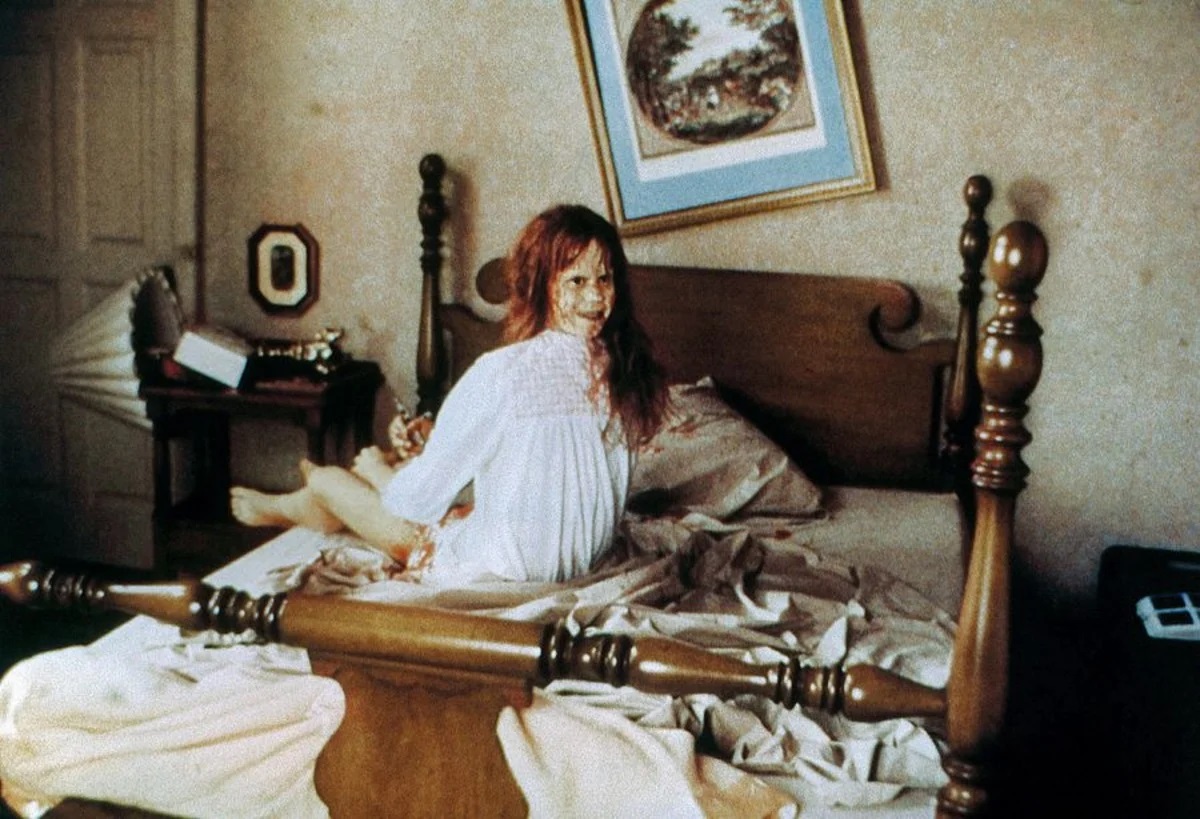
I’m making The Exorcist for Warners. It’s about a 12-year-old girl possessed by a demon. Her mother takes her through medicine and psychiatry and she gets progressively worse. Finally she’s taken to the Jesuits in Georgetown where they attempt to exorcise the demon. Exorcism still exists in the Catholic ritual. This is a ease history, it happened in 1947. I intend to do it as a straightforward, realistic film about inexplicable things, which I think most of my work is sort of about….
Film Quarterly, Vol. 25 No. 4, Summer, 1972; pp. 2-9