by Pauline Kael
Jean-Luc Godard intended to give the public what it wanted. His next film was going to be about a girl and a gun—”A sure-fire story which will sell a lot of tickets.” And so, like Henry James’ hero in The Next Time he proceeded to make a work of art that sold fewer tickets than ever. What was to be a simple commercial movie about a robbery became Band of Outsiders.
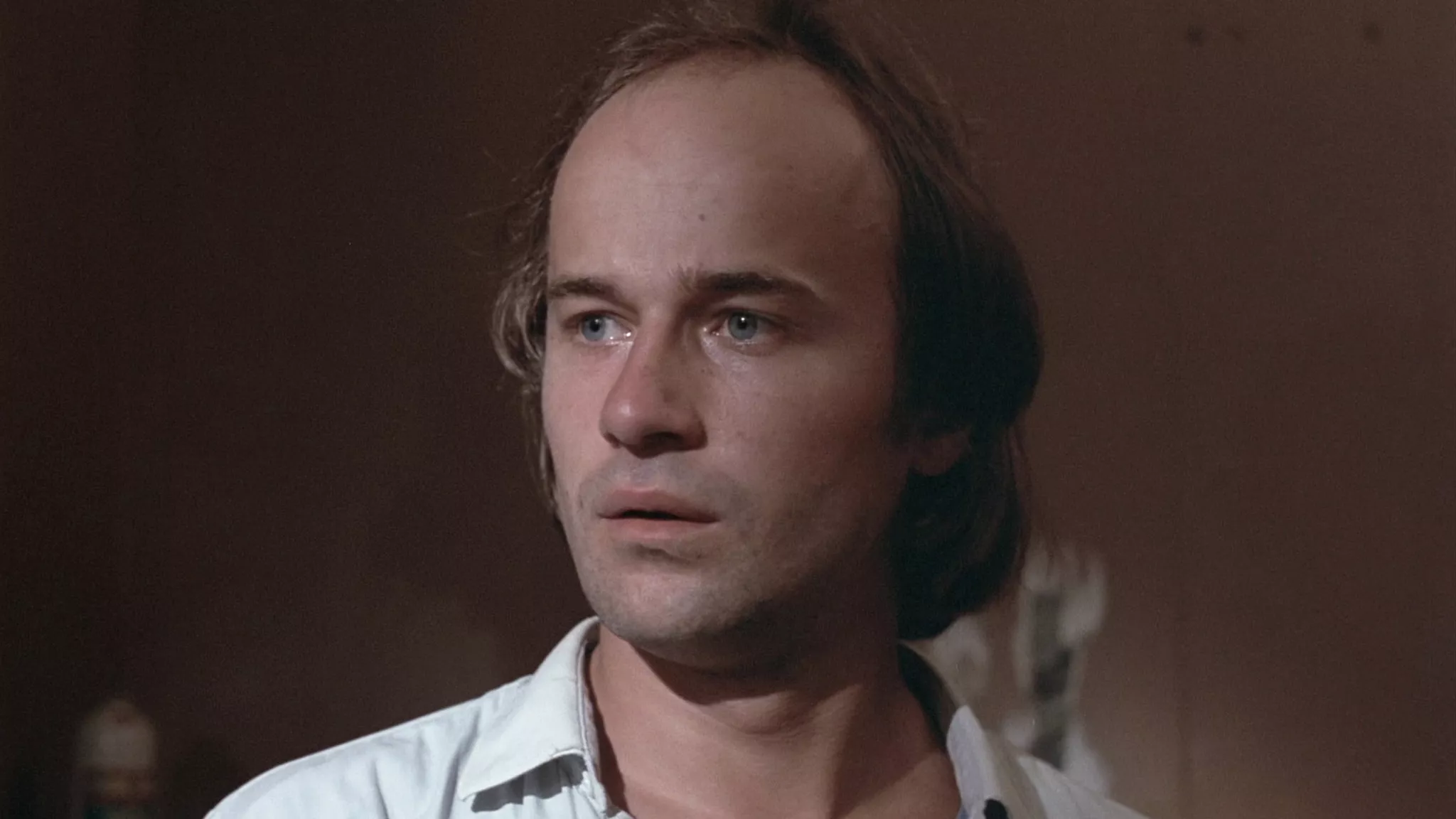
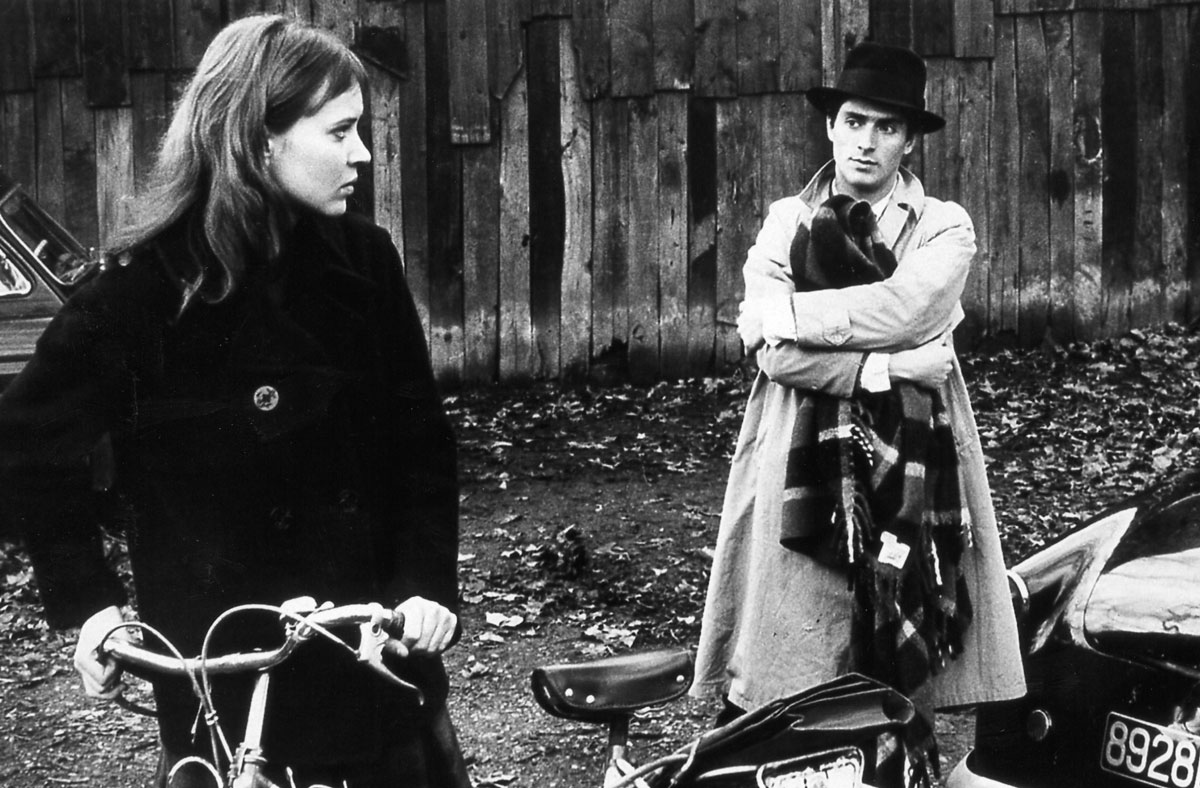
The two heroes of Band of Outsiders begin by play-acting crime and violence movies, then really act them out in their lives. Their girl, wanting to be accepted, tells them there is money in the villa where she lives. And we watch, apprehensive and puzzled, as the three of them act out the robbery they’re committing as if it were something going on in a movie—or a fairy tale. The crime does not fit the daydreamers nor their milieu: We half expect to be told it’s all a joke, that they can’t really be committing an armed robbery. Band of Outsiders is like a reverie of a gangster movie as students in an expresso (sic) bar might remember it or plan it—a mixture of the gangster film virtues (loyalty, daring) with innocence, amorality, lack of equilibrium.
It’s as if a French poet took an ordinary banal American crime novel and told it to us in terms of the romance and beauty he read between the lines; that is to say, Godard gives it his imagination, recreating the gangsters and the moll with his world of associations—seeing them as people in a Paris cafe, mixing them with Rimbaud, Kafka, Alice in Wonderland. Silly? But we know how alien to our lives were those movies that fed our imaginations and have now become part of us. And don’t we—as children and perhaps even later—romanticize cheap movie stereotypes, endowing them with the attributes of those figures in the other arts who touch us imaginatively? Don’t all our experiences in the arts and popular arts that have more intensity than our ordinary lives, tend to merge in another imaginative world? And movies, because they are such an encompassing, eclectic art, are an ideal medium for combining our experiences and fantasies from life, from all the arts, and from our jumbled memories of both. The men who made the stereotypes drew them from their own scrambled experience of history and art—as Howard Hawks and Ben Hecht drew Scarface from the Capone family “as if they were the Borgias set down in Chicago.”
The distancing of Godard’s imagination induces feelings of tenderness and despair which bring us closer to the movie-inspired heroes and to the wide-eyed ingenue than to the more naturalistic characters of ordinary movies. They recall so many other movie-lives that flickered for us; and the quick rhythms and shifting moods emphasize transience, impermanence. The fragile existence of the characters becomes poignant, upsetting, nostalgic; we care more.
This nostalgia that permeates Band of Outsiders may also derive from Godard’s sense of the lost possibilities in movies. He has said, “As soon as you can make films, you can no longer make films like the ones that made you want to make them.” This we may guess is not merely because the possibilities of making big expensive movies on the American model are almost non-existent for the French but also because, as the youthful film enthusiast grows up, if he grows in intelligence, he can see that the big expensive movies now being made are not worth making. And perhaps they never were: The luxury and wastefulness that, when you are young, seem as magical as peeping into the world of the Arabian Nights, become ugly and suffocating when you’re older and see what a cheat they really were. The tawdry American Nights of gangster movies that were the magic of Godard’s childhood formed his style—the urban poetry of speed and no afterthoughts, fast living and quick death, no padding, no explanations—but the meaning had to change.
An artist may regret that he can no longer experience the artistic pleasures of his childhood and youth, the very pleasures that formed him as an artist. Godard is not, like Hollywood’s product producers, naïve (or cynical) enough to remake the movies he grew up on. But, loving the movies that formed his tastes, he uses this nostalgia for old movies as an active element in his own movies. He doesn’t, like many artists, deny the past he has outgrown; perhaps he is assured enough not to deny it, perhaps he hasn’t quite outgrown it. He reintroduces it, giving it a different quality, using it as shared experience, shared joke. He plays with his belief and disbelief, and this playfulness may make his work seem inconsequential and slighter than it is: It is as if the artist himself were deprecating any large intentions and just playing around in the medium. Reviewers often complain that they can’t take him seriously; when you consider what they do manage to take seriously, this is not a serious objection.
Because Godard’s movies do not let us forget that we’re watching a movie, it’s easy to think he’s just kidding. Yet his reminders serve an opposite purpose. They tell us that his aim is not simple realism, that the lives of his characters are continuously altered by their fantasies. If I may be deliberately fancy; he aims for the poetry of reality and the reality of poetry. I have put it that way to be either irritatingly pretentious or lyrical—depending on your mood and frame of reference, in order to provide a critical equivalent to Godard’s phrases. When the narrator in Band of Outsiders says, “Franz did not know whether the world was becoming a dream or a dream becoming the world” we may think that that’s too self-consciously loaded with mythic fringe benefits and too rich an echo of the narrators of Orphée and Les Enfants Terribles, or we may catch our breath at the beauty of it. I think those most responsive to Godard’s approach probably do both simultaneously. We do something similar when reading Cervantes. Quixote, his mind confused by tales of Knight Errantry, going out to do battle with imaginary villains, is an ancestor of Godard’s heroes, dreaming away at American movies, seeing life in terms of cops and robbers. Perhaps a crucial difference between Cervantes’ mock romances and Godard’s mock melodramas is that Godard may (as in Alphaville) share some of his characters’ delusions.
It’s the tension between his hard, swift, cool style and the romantic meaning that style has for him (and for other lovers of “unsentimental”—!—American gangster movies) that is peculiarly modern and exciting in his work. It’s the casual way he omits mechanical scenes that don’t interest him so that the movie is all high points and marvelous (sic) “little things.” Godard’s style, with its nonchalance about the fates of the characters—a style drawn from American movies and refined to an intellectual edge in post-war French philosophy and attitudes—is an American teenager’s ideal. To be hard and cool as a movie gangster yet not stupid or gross like a gangster—that’s the cool grace of the privileged, smart young.
It’s always been relatively respectable, and sometimes fashionable, to respond to our own experience in terms drawn from the arts: To relate a circus scene to Picasso, or to describe the people in a Broadway delicatessen as an Ensor. But until recently, people were rather shamefaced or terribly arch about relating their reactions in terms of movies. That was more a confession than a description. Godard brought this way of reacting out into the open of new movies at the same time that the Pop Art movement was giving this kind of experience precedence over responsiveness to the traditional arts. By now—so accelerated has cultural history become—we have those students at colleges who when asked what they’re interested in say, “I go to a lot of movies.” And some of them are so proud of how compulsively they see everything in terms of movies and how many times they’ve seen certain movies that there is nothing left for them to relate movies to. They have been soaked up by the screen.
The world of Band of Outsiders is both “real”—the protagonists feel, they may even die; and yet “unreal” because they don’t take their own feelings or death very seriously, as if they weren’t important to anybody, really. Their only identity is in their relationship with each other. This, however we may feel about it, is a contemporary mood; and Godard, who expresses it, is part of it. At times it seems as if the movie had no points of reference outside itself. When this imagined world is as exquisite as in Band of Outsiders we may begin to feel that this indifference or inability to connect with other worlds is a kind of aesthetic expression and a preference. The sadness that pervades the work is romantic regret that you can no longer believe in the kind of movie you once wanted to be enfolded in, becoming part of that marvellous (sic) world of beauty and danger with its gangsters who trusted their friends and its whores who never really sold themselves. It’s the sadness in frivolity—in the abandonment of efforts to make sense out of life in art. Godard in his films seems to say; only this kind of impossible romance is possible. You play at cops and robbers but the bullets can kill you. His movies themselves become playful gestures, games in which you succeed or fail with a shrug, a smile.
The penalty of Godard’s fixation on the movie past is that, as Alphaville reveals, old movies may not provide an adequate frame of reference for a view of this world. Then we regret that Godard is not the kind of artist who can provide an intellectual structure commensurate with the brilliance of his style and the quality of his details. Because, of course, we think in terms of masterpieces and we feel that here is a man who has the gifts for masterpieces. But maybe he hasn’t; maybe he has artistry of a different kind.
New Republic, September 10, 1966